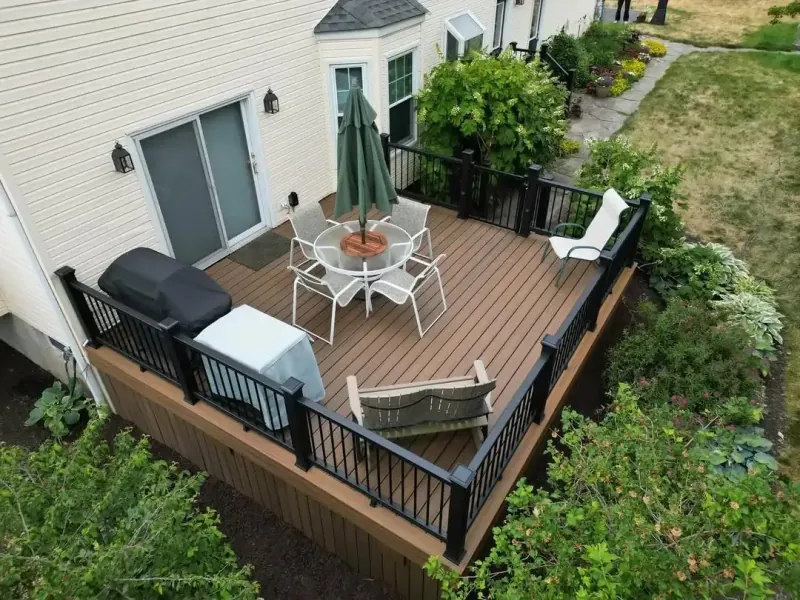
Deck Maintenance Tips: Keep Your Deck Looking New

VM Power Decks
Deck Building Expert
0 min read
2.4K views
Simple, seasonal steps to clean and protect your deck so it stays safe and looks great for years — whether it's wood or composite.
A little regular care extends the life of your deck and keeps it safe. These tips work for both wood and composite decks in Pennsylvania and New Jersey.
Spring and fall cleanup
Sweep off leaves and debris so moisture doesn’t sit on the boards. Use a mild soap and water (or a deck cleaner) and a soft brush or mop. Rinse well. For composite, avoid harsh chemicals and power washers on a high setting — they can damage the surface. For wood, a gentle wash is fine; follow with stain or sealant as needed.
Check for loose boards and hardware
Walk the deck and check for loose screws or nails, wobbly railings, and any soft or cracked boards. Tighten or replace hardware and flag any structural issues. Fixing small problems now prevents bigger, costlier repairs later.
Wood decks: stain and seal
If you have a wood deck, plan to stain or seal it every 2–3 years (or as recommended by the product). Do it when the wood is dry and the weather is mild. That keeps moisture out and the wood from graying or splitting.
When to call a pro
If you see significant sagging, rot, or unstable railings, get a professional inspection. We do deck safety checks and can recommend repairs or replacement so your deck stays safe and usable for years.
Schedule a deck check or learn about our restoration services.
Related Articles

Trex vs TimberTech: Which Composite Decking Is Better?
Trex and TimberTech are the two most popular composite decking brands. We've installed thousands of both — here's an honest comparison of cost, durability, appearance, and warranty to help you choose.
How Much Does a Deck Cost in Lehigh Valley PA? (2026 Guide)
Deck costs in Lehigh Valley PA range from $15–$75 per square foot installed, depending on materials, size, and features. Here's a detailed breakdown of what to expect in 2026.