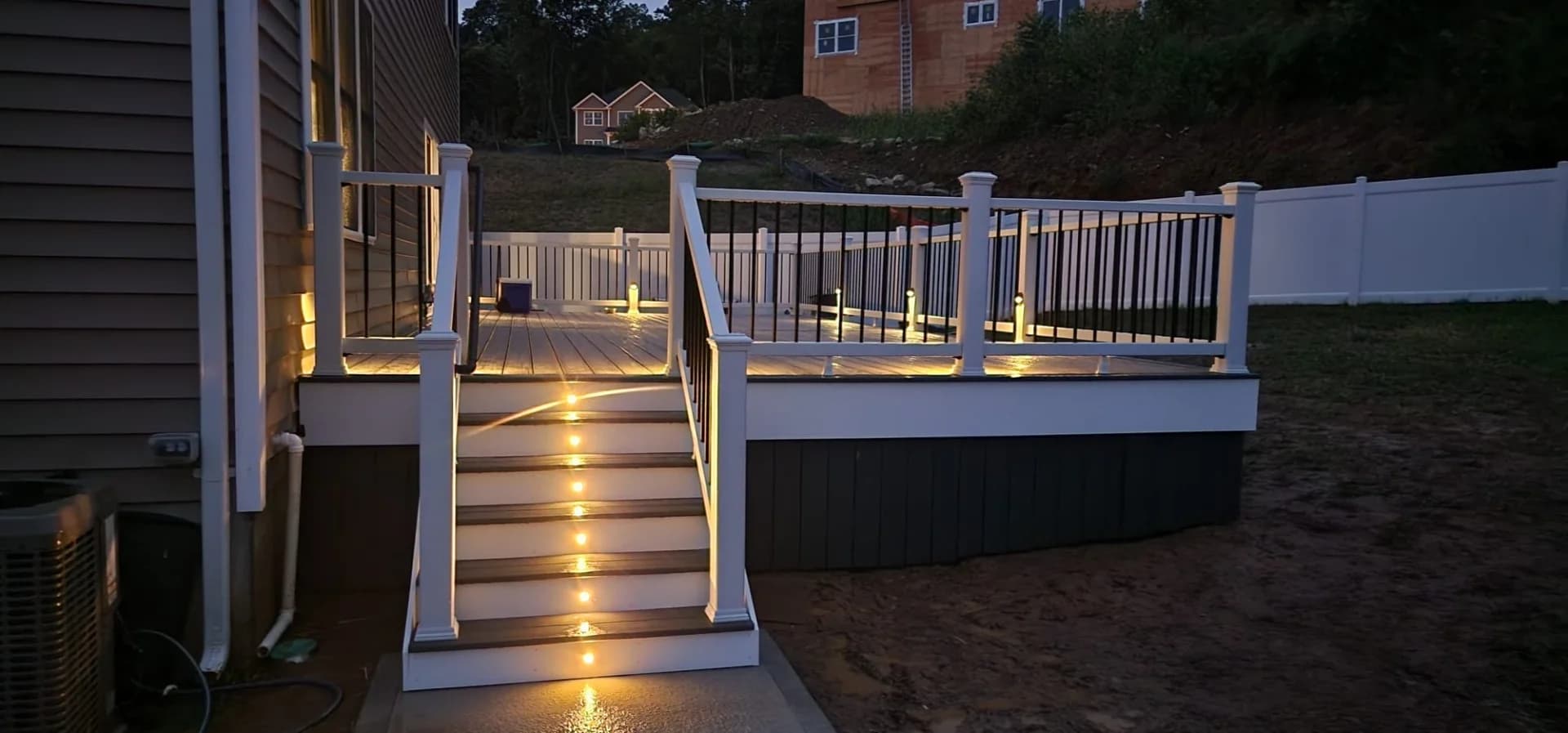
How Long Does a Composite Deck Last? Real Lifespan Data
We've been building composite decks in PA since 2005. Here's what we've actually seen after 10, 15, and 20 years on real Lehigh Valley homes.
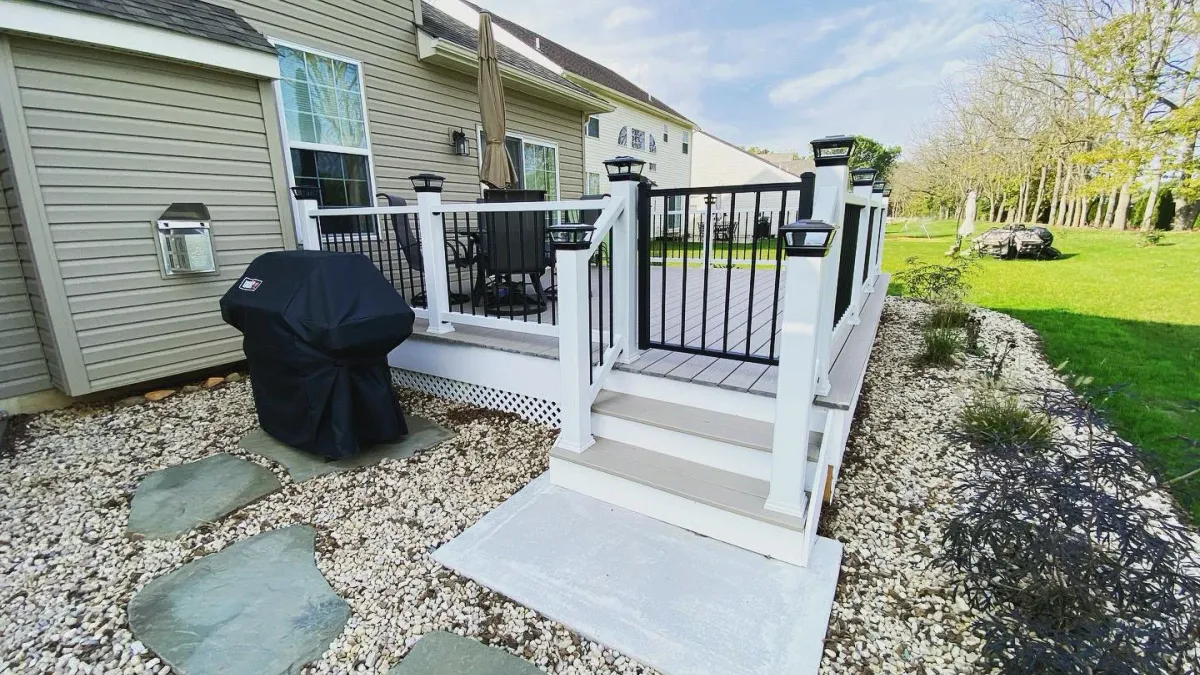
We've been building composite decks in PA since 2005. Here's what we've actually seen after 10, 15, and 20 years on real Lehigh Valley homes.
The short answer: 25 to 50 years depending on the product generation and how well it's maintained. But that number needs context, because early composite decking and modern composite decking are very different products.
What we've actually seen in the field
We've been building decks across the Lehigh Valley and Poconos since 2005. That gives us 20 years of real-world data on how composite holds up in Pennsylvania weather (freeze-thaw cycles, summer humidity, UV exposure). Here's the honest breakdown:
First-generation composite (pre-2010)
Early composites had problems. We've torn out plenty of first-gen Trex and ChoiceDek that lasted only 10-12 years before fading badly, growing mold in the core, or developing soft spots. These products didn't have the protective cap layer that modern boards use. If your composite deck is from this era and showing issues, replacement is usually smarter than repair.
Capped composite (2010-2020)
The introduction of cap technology changed everything. Products like Trex Transcend and TimberTech Legacy from this period are holding up well on homes in Allentown, Bethlehem, and Easton. We have 12-15 year old capped composite decks that still look close to new. Expected lifespan: 30-40 years.
Current generation (2020+)
Today's premium composites (Trex Transcend Lineage, TimberTech Vintage, Azek Harvest) use improved UV inhibitors, harder cap shells, and better core formulations. Manufacturers warrant against fading and staining for 25-50 years. Based on accelerated aging tests and what we've seen from the technology, 40-50 years is realistic for current premium products.
What shortens a composite deck's life
- Poor ventilation underneath: Trapped moisture under the deck causes the substructure (usually pressure-treated wood) to rot before the boards fail. We always ensure proper ground clearance and airflow.
- Improper joist spacing: Budget builders sometimes space joists at 24 inches. We use 16-inch spacing (12 inches for diagonal patterns) to prevent board sag over time.
- Standing water: Composite is water-resistant, not waterproof in every scenario. Decks need proper slope (1/8 inch per foot minimum) so water drains off.
- Never cleaning: Dirt and pollen build up and trap moisture against the surface. An annual power wash at low pressure keeps the cap layer working properly.
Composite vs wood lifespan in PA
| Material | Realistic lifespan | Maintenance required |
|---|---|---|
| Pressure-treated pine | 10-15 years | Stain/seal every 1-2 years |
| Cedar | 15-20 years | Stain/seal every 2-3 years |
| Ipe (hardwood) | 25-40 years | Oil annually or let gray |
| Entry composite | 25-30 years | Annual wash |
| Premium composite | 40-50 years | Annual wash |
Want to know the condition of your existing deck or get a quote on composite? Request a free inspection. We'll tell you honestly whether your deck needs repair, resurfacing, or full replacement.

Related Articles

Trex vs TimberTech: Which Composite Decking Is Better?
Trex and TimberTech are the two most popular composite decking brands. We've installed thousands of both — here's an honest comparison of cost, durability, appearance, and warranty to help you choose.
How Long Does It Take to Build a Deck? Complete 2026 Timeline Guide (PA/NJ Realistic Expectations)