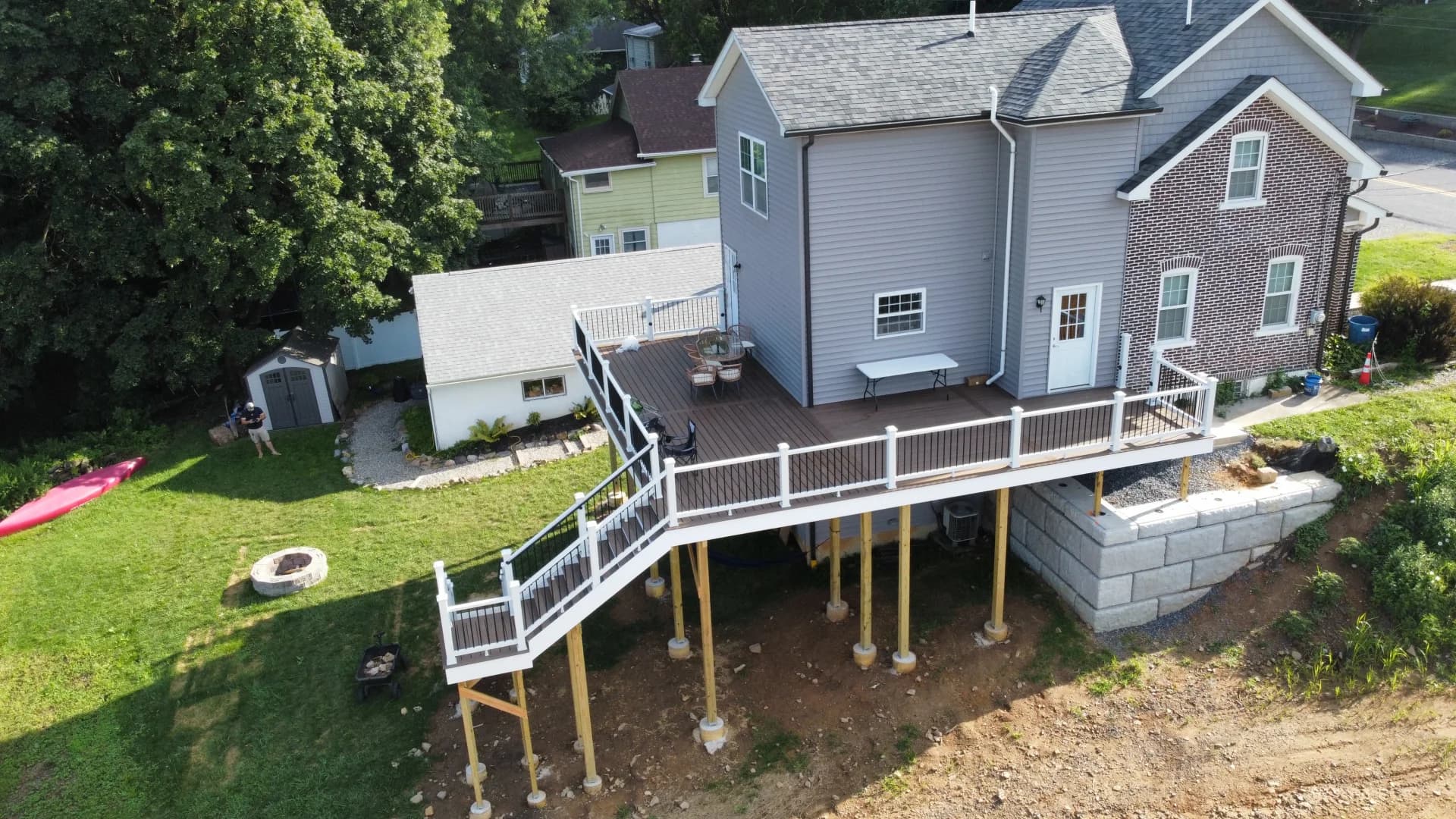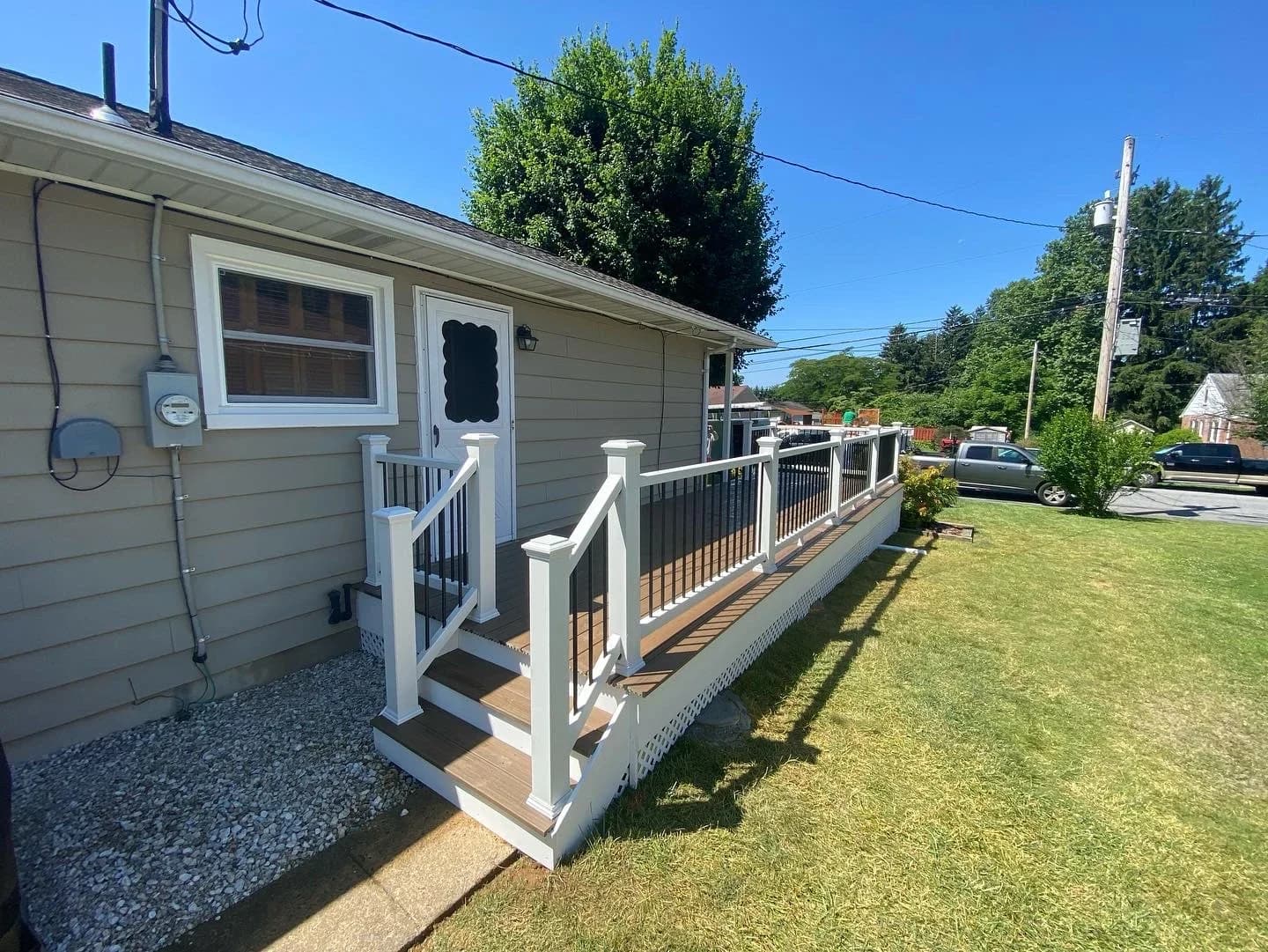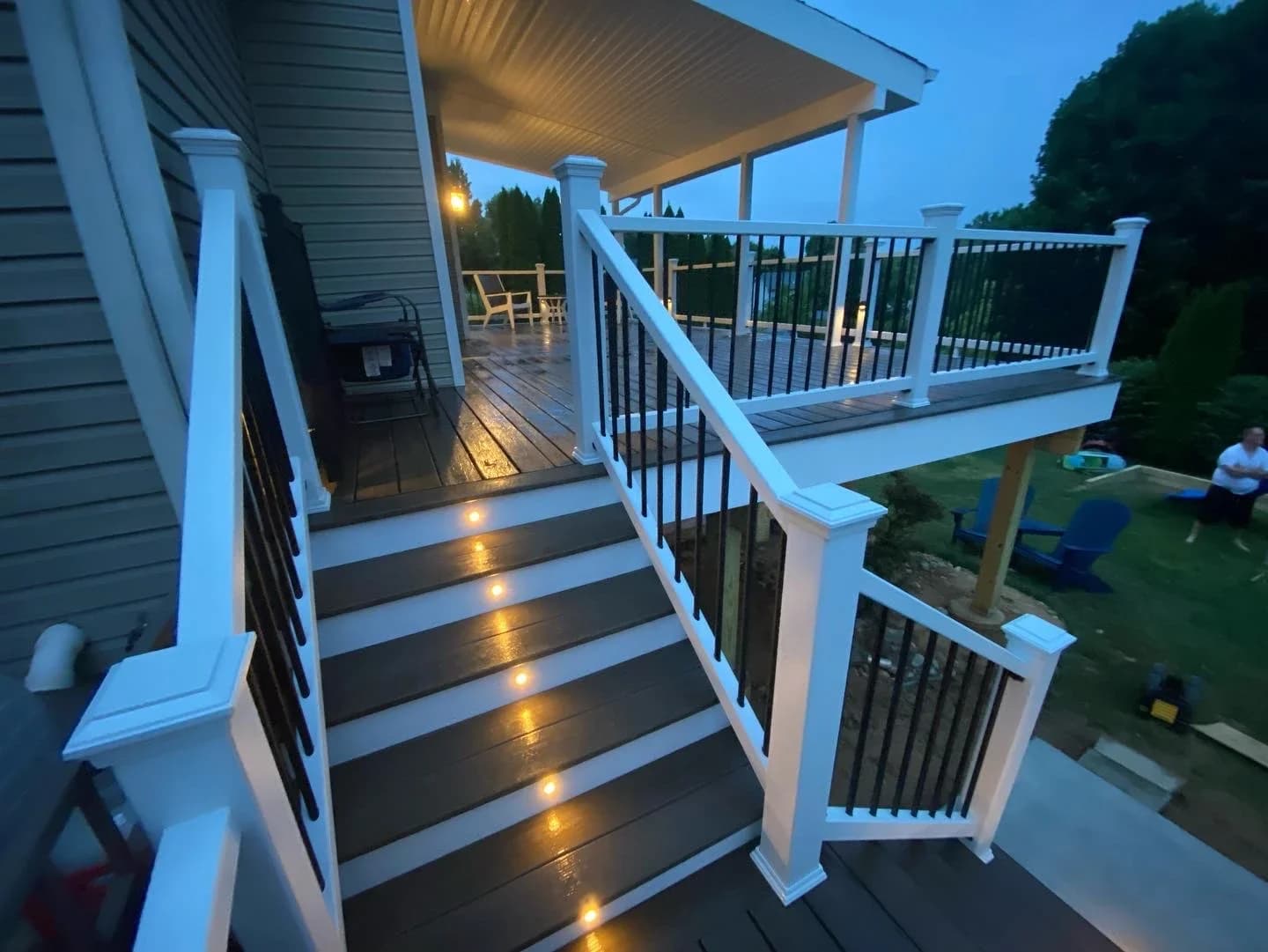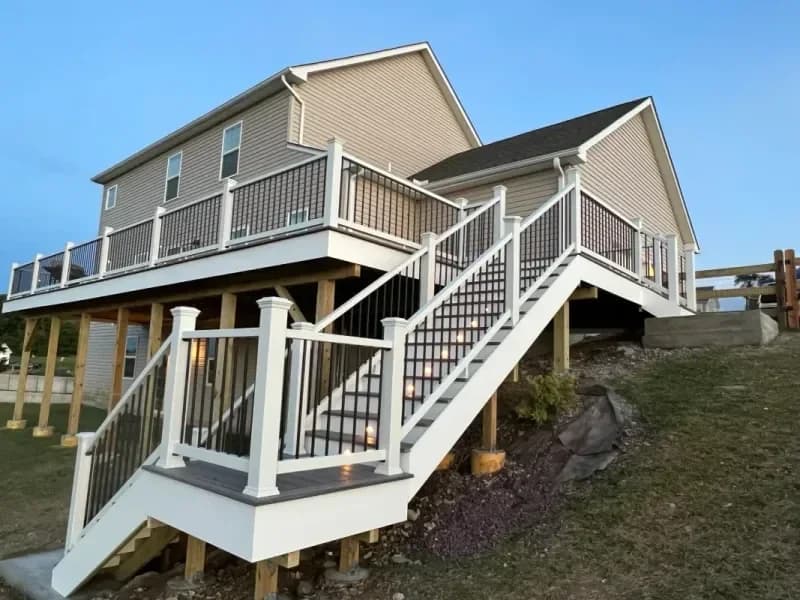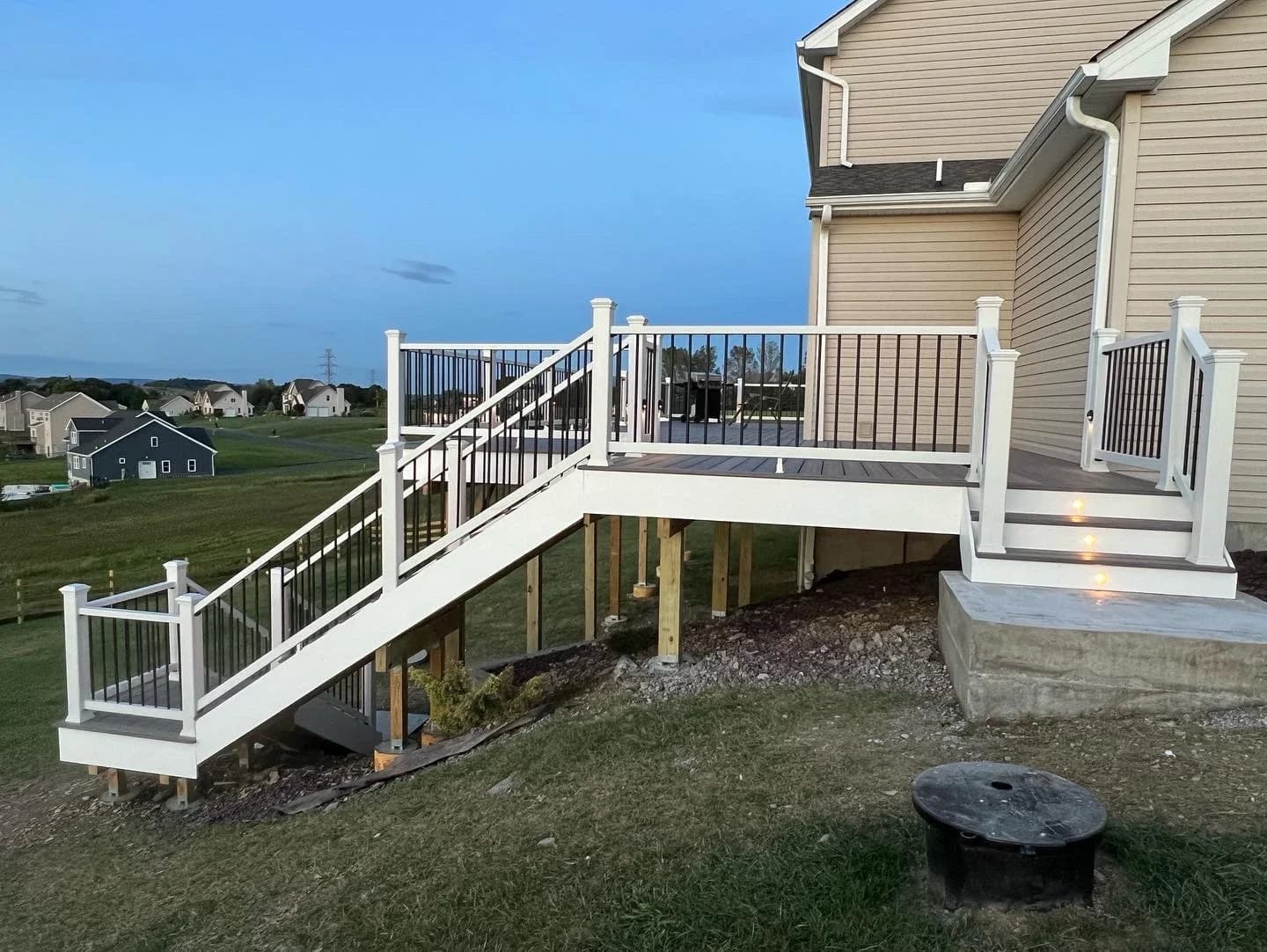
Water is the #1 cause of premature deck failure in Pennsylvania and New Jersey. Freeze-thaw cycles, heavy spring rain, and humid summers trap moisture where you can’t see it. A smart drainage plan protects your ledger, joists, and framing so your deck stays safe and beautiful for decades.
Moisture sits on horizontal framing longer in our climate. That leads to rot, mold, and rusted connectors. Drainage reduces water exposure, keeps airflow moving, and protects structural integrity—especially for elevated decks, walkouts, and second-story builds.
These systems install on top of joists before decking goes down. They protect framing the most and are ideal for composite decks or premium builds. They also create a continuous waterproof layer that directs water to a gutter or drip edge.
Below-joist systems catch water after it passes through the deck boards. They’re cost-effective when you want a dry patio beneath the deck, but they do not protect the joists. You still need ledger flashing and joist tape to reduce rot.
Most deck failures start at the house connection. Use continuous metal flashing, compatible sealants, and a capillary break to keep water from wicking behind siding.
Drainage needs slope—usually 1/8" to 1/4" per foot—so water moves toward a gutter or drip edge. A flat system will pool and fail early.
Choose stainless or hot-dipped galvanized fasteners. In PA/NJ, salt and humidity accelerate corrosion, especially for coastal NJ or high-salt winter areas.
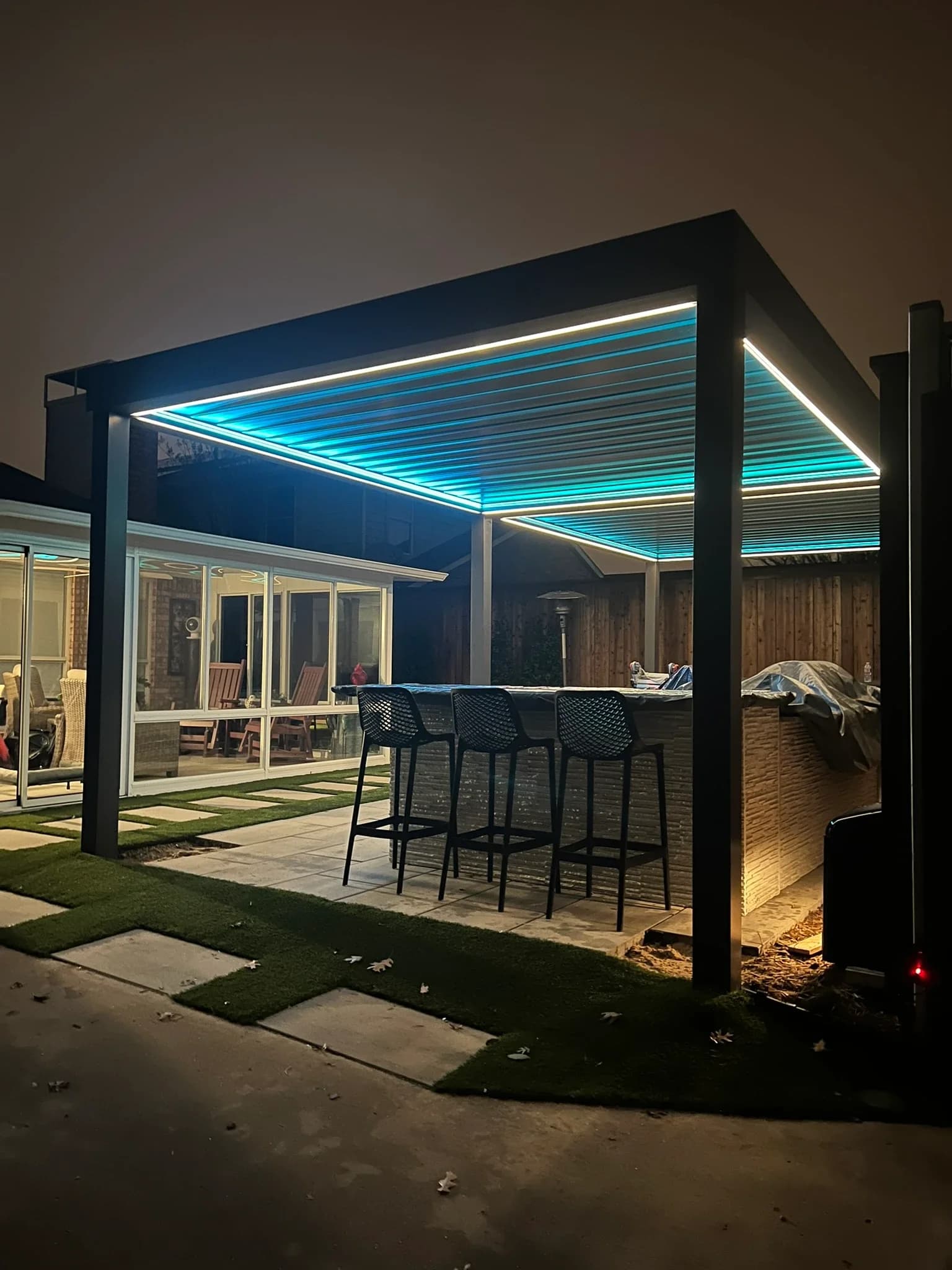
If you want a dry patio, plan drainage early. We recommend pairing a below-joist system with recessed lighting and a finished ceiling. This turns unused space into a functional outdoor room.
Clean gutters twice a year, check for clogs after heavy storms, and inspect flashing at least once annually. A quick seasonal check prevents major repairs later.
Freeze-thaw cycles require membranes rated for cold flexibility. Always match system components to manufacturer specifications so warranties stay intact.
If you see staining on joists, persistent dampness, or sagging boards, it’s time to upgrade. Many drainage systems can be retrofitted with minimal disruption.
Drainage is easiest and most cost-effective when designed from the start. If you’re planning a new deck, ask about waterproofing and under-deck usability during the design phase. You can also explore our deck construction service for full planning support.
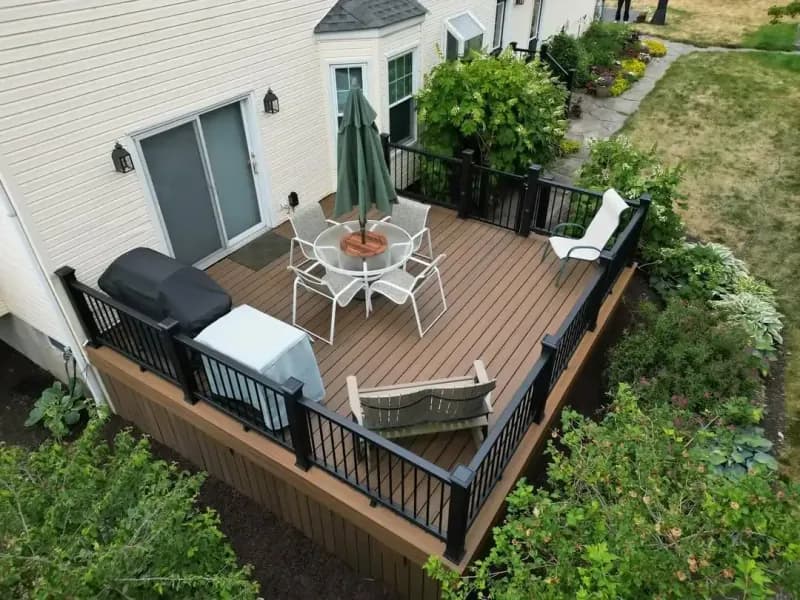
Ground-level decks benefit from airflow and proper grade, but full drainage is usually reserved for elevated decks.
Not if you follow manufacturer-approved systems and fasteners.
Yes, most below-joist systems can be retrofitted with minimal framing changes.
It reduces standing water, which lowers algae growth and slip risk over time.